
- The Government plans new electricity projects through 2030 to meet rising demand, while the DR focuses on renewable energy and storage.
The Minister of Energy and Mines highlighted how diversifying the electricity generation matrix with various energy sources reduces the country’s risk of rising oil prices, noting that, in 2000, the 88% of the matrix relied on oil derivatives and today it is 9%.
The Minister said the sector is focusing on renewable energy planning and storage while continuing to attract new investment.
Regarding planning, he stressed that the Dominican Government plans to hold a tender next year for new electricity generation projects to meet the growing demand for energy in the country.
He said this approach will help ensure a stable energy supply in the coming years, with projects positioned to be ready in 2031 and 2032.
Projects entering the system from 2026 form part of a plan to prepare the electricity network for the Dominican Republic’s generation needs through 2030 and beyond.
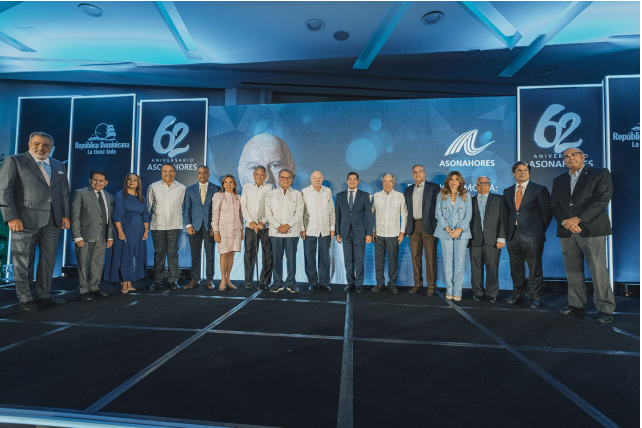
Santos spoke during the opening of the Latin American and Caribbean Energy Organization’s XI Energy Week (OLACDE).
Among the government’s priorities is renewable energy and storage, the Minister of Energy and Mines stressed, explaining that the country is making progress with incorporating different energy sources and in the development of storage, while attracting local and foreign investment to expand production capacity.
He pointed out that during the last four years the country received more than 1,000 million dollars a year in foreign investment linked mainly to renewable energies.
He emphasized that in the first six months of this year the country received more than 3,000 million dollars in foreign investment, of which 900 million are related to renewable energy and energy.
As part of this forward planning, Santos detailed the power plants to be integrated into the system in the coming years.
Energía 2000, in Manzanillo, has 290 megawatts in operation and will add another 140 megawatts in the next 30 months, when the gas cycle closes.
He also cited the San Felipe generator, in Boca Chica, with 467 megawatts, scheduled to link up in 2027. According to the minister, this will become the largest unitary plant built in the Dominican Republic.
Added to this are the Manzanillo projects, with blocks of 426 megawatts planned for 2028 and 2029, which will contribute around 852 megawatts to the system. He also indicated that 130 megawatts will be incorporated in 2028.
In terms of renewable energy, the minister reported that between 2026 and 2028 another 1,000 megawatts will be integrated.
Storage is another component of energy planning for the coming years.
The minister reported that 800 megawatts of batteries will be incorporated between now and 2028, and another 600 megawatts will be added by the transmission company at the battery level.
The event addresses issues such as interconnection, investments, infrastructure, and energy cooperation.
OLACDE Executive secretary, Andrés Rebolledo, stated that the regional goal is interconnection and that, moving forward, investments, infrastructure and an energy cooperation framework with rules that last over time are needed.
He stressed that integration takes on a new dimension as a tool for security and resilience and called for broadening the regional vision on energy networks to build a transition that strengthens security of supply, boosts development and competitiveness and, above all, improves living conditions for everyone.
Rebolledo also highlighted the opportunities for the Caribbean to advance in its energy transformation. The event placed energy security, resilience to climate phenomena, and access to investment among the priorities of this subregion.
Latin America and the Caribbean reached 67% renewable electricity generation by 2025, but they need to strengthen networks, storage, and interconnections to accompany new uses of electricity.
He explained that these facilities will allow unused energy generated during the day to be stored and transferred to peak hours.
Carolina Rendón, World Bank Group representative in the Dominican Republic, noted that the expansion of energy infrastructure, access to reliable and affordable electricity service, and the mobilization of public and private investments are among the main challenges facing Latin America and the Caribbean, but they also represent opportunities to boost the region’s development.
According to the representative of the international organization, having reliable and accessible electricity is a pillar to improve the quality of life for lower income families.
She also said that one of the challenges is to ensure that energy adds to creating opportunities.
The energy infrastructure gap to move towards sustainable development accounts for about 11% in Latin America. “This challenge arises in a scenario marked by changes in international fuel prices, technological advances, innovations in energy, increasingly frequent adverse weather phenomena and an increase in demand, together with public budget constraints,” she stressed.
Another challenge is to bring energy to remote areas while expanding and strengthening networks. This requires a continuous joint effort between the public and private sectors in areas such as planning, transmission, regulation, and financing, along with greater regional integration.
Access and quality of service
One priority is to ensure that electricity reaches the entire population with adequate service and at an affordable cost, Rendón said, indicating that about 18 million people in Latin America and the Caribbean still have no access to electricity.
Closing this gap requires reaching the most remote communities with solutions tailored to their needs.
However, power connection is not enough. The service must be available when it is needed and at a cost that does not force families to sacrifice other needs, nor limit the growth of small businesses or the development of certain industries.
ETED highlights advances in networks
System. The executive vice president of the Dominican Electric Transmission Company, Alfonso Rodríguez Tejada, explained that ETED is going through a transformation process supported by historic capital investments in transmission lines, auxiliary infrastructures, maintenance and new technologies.
He also highlighted the progress of strategic projects aimed at expanding the capacity of the transmission network. Among them, he mentioned the Puerto Plata-Río San Juan line, scheduled to enter into operation at the end of this year.
Source: