Tourism growth should be measured not only by the number of visitors, but also by its ability to benefit more communities
Former president of the National Association of Hotels and Tourism (Asonahores), Enrique de Marchena, said that the Dominican Republic must focus on raising the quality of its human capital, accelerating digital transformation, strengthening internal mobility and moving towards a more sustainable model if it wants to preserve the tourism leadership achieved in the region.
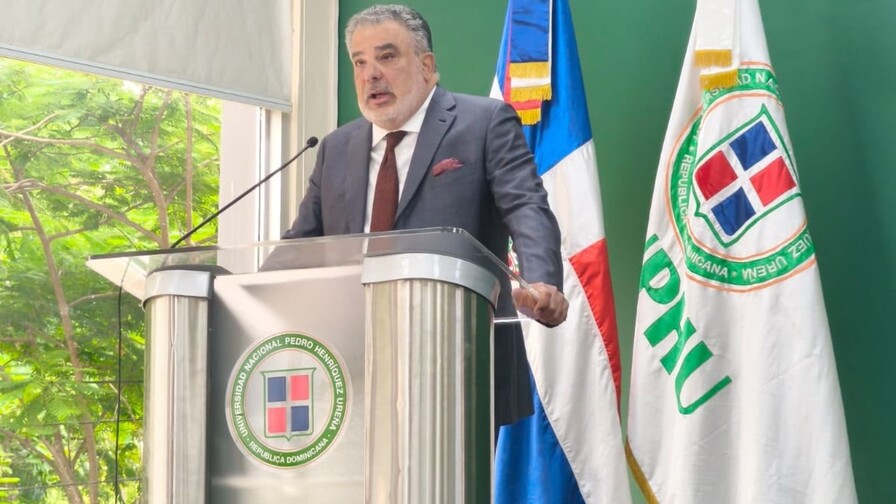
The statements were made during the conference “Evolution of the tourism industry of the Dominican Republic: today, before and after”, held at the Pedro Henríquez Ureña National University (UNPHU), as reported by the academy through a press release.
Organized by the UNPHU Faculties of Law and Business, the presentation served as a stage for De Marchena to explain that Dominican tourism has gone from being an economic activity to becoming an ecosystem that impacts practically all the productive sectors of the country.
The lawyer and tourism specialist highlighted that, according to data from the World Travel & Tourism Council (WTTC), in addition to generating more than 882,000 jobs, tourism contributed more than US$21,000 million to the Dominican gross domestic product (GDP) in 2025, equivalent to 16.6% of the national economy.
De Marchena attributed this growth to the alliance between the public and private sectors, institutional stability and the expansion of air connectivity and large international hotel franchises, factors that, he said, have consolidated the country as the second most popular tourist destination in Latin America.
Structural challenges
However, he warned that future success will depend on facing structural challenges. Among them, he cited the technical training of staff, the incorporation of artificial intelligence and digital tools, the improvement of transport between tourist poles, environmental sustainability and the regulation of short-income platforms to guarantee fair competition and quality standards.
He also argued that tourism growth should be measured not only by the number of visitors or revenue generated, but also by its ability to benefit more communities and preserve the resources that sustain the country’s main industry.
“Above all, Dominican tourism is a history of people,” he said.
Source: