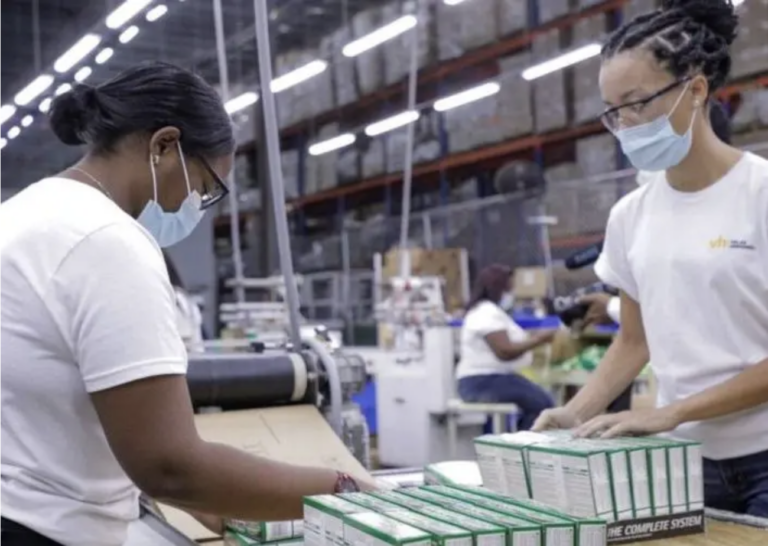
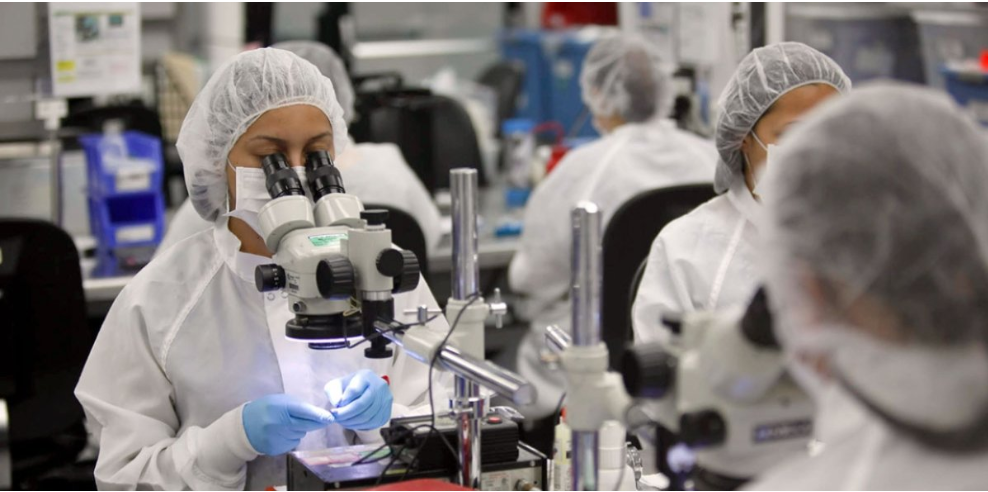
- The transformation has been as surprising as it has been fast, emerging as an industry that no longer just assembles, but one that thinks, designs and creates.
Like the dawn silently breaking, the free zones have quietly shed their skin. What yesterday was routine assembly today breathes intelligence and purpose.
This perception stems from the figures shared with us at Hoy’s Economic Meeting with the president of the Dominican Association of Free Zones (ADOZONA), Claudia Pellerano, and executive vice president, José Manuel Torres.
The data clearly point to a profound structural change: from a model intensive in low-skilled labor to one focused on know-how, technology and added value.
The employment structure has also been transformed. Between 2006 and 2025, the proportion of workers employed in the sector went from 84% to 62%, while technicians increased from 10% to 26% and administrative workers from 6% to 12%.
This is no minor change! This shift reveals greater sophistication in production processes, a growing demand for technical skills – engineering, maintenance, quality, automation – and an increase in management, logistics and regulatory compliance functions. In other words, repetitive work is replaced by skilled work, a distinctive feature of industries with greater technological content.
This shift is also reflected in the transformation of the productive range. Between 2010 and 2025, textile production fell from 53% to 10.9% of the total. In contrast, medical devices climbed from 7% to 33%, while electrical and electronic products went from 12% to 13.9%. Agribusiness and tobacco were also gaining ground, now with more sophisticated processing: the former reached 7.3% in 2025 (previously without enough weight to stand out in 2010) and the latter grew from 6% to 14.4% in the period.
All this shows a shift from traditionally labor-intensive industries to sectors with greater technical demands, international regulation, and integration into global value chains. Particularly relevant is the case of medical devices, which demand strict certifications, high-precision processes and highly specialized personnel.
By interweaving employment and production data, the message becomes clear: the lower weight of simple sectors reduces the proportion of workers, while the rise of complex sectors boosts the demand for technicians and administrative personnel.
The process has been as surprising as it has been fast, a transformation that has barely left a trail. And yet, from that silent transition, an industry has emerged that no longer just assembles; it thinks, designs and creates.
Source: