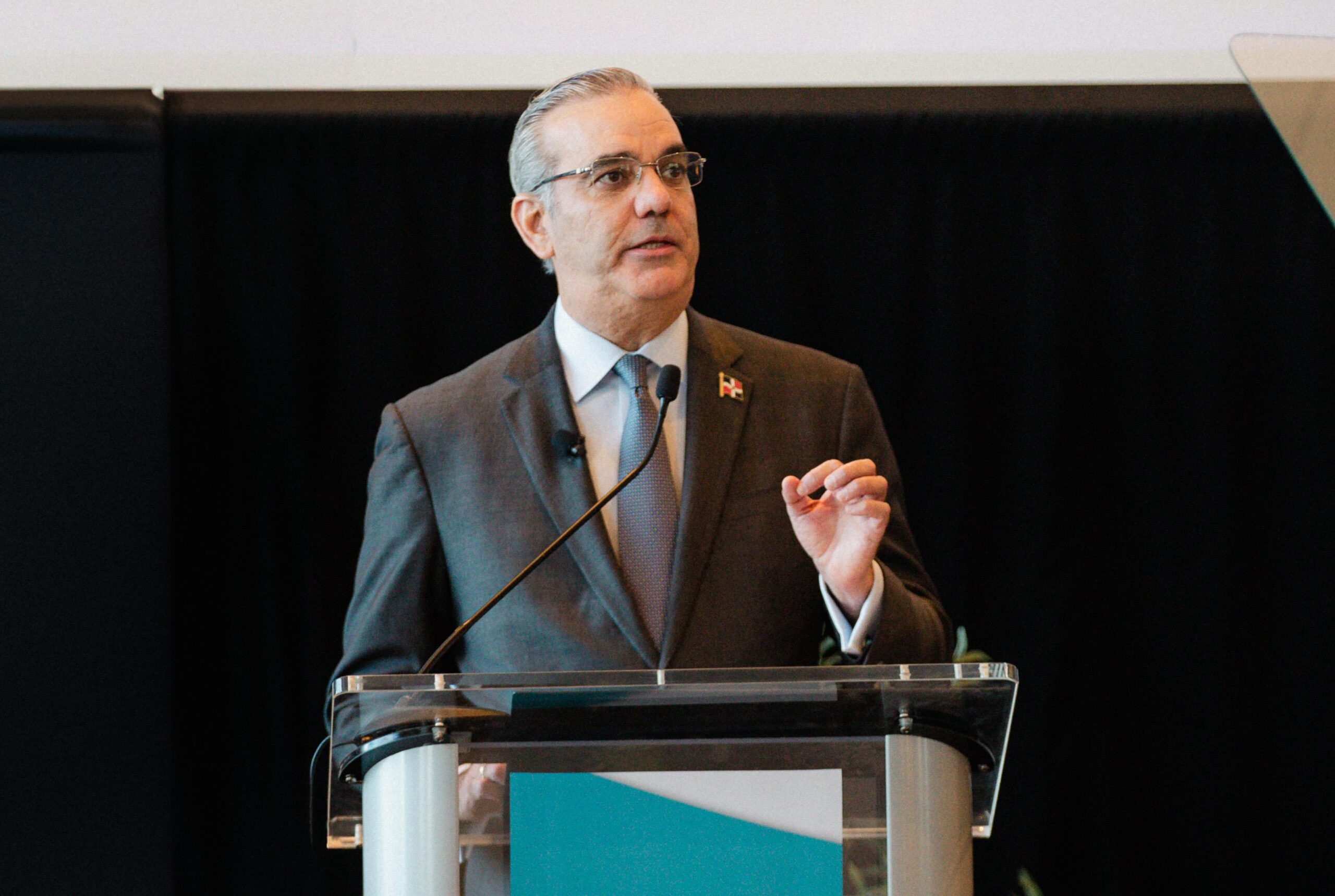

The administration of United States President Donald J. Trump has approved the Presidential Permit for the development of a submarine power cable that will interconnect the electricity systems of the Dominican Republic and Puerto Rico, opening the possibility for the Dominican Republic to export electric power to the U.S. territory. This was announced by President Luis Abinader during a press briefing at the National Palace.
The President explained that the authorization granted by the U.S. government represents a decisive step toward strengthening regional energy cooperation and places the Dominican Republic in a strategic position within the Caribbean in terms of electricity generation and export capacity. The initiative had been previously referenced by President Abinader and has been closely followed by Dominican media specializing in economic and energy-related coverage.
A project with a long-standing background
The initiative, known as the Hostos Project, has been widely covered by Dominican media outlets such as Diario Libre, Hoy and De Último Minuto, which have documented its evolution from the initial technical proposals to the pursuit of the U.S. Presidential Permit—an essential requirement given that Puerto Rico is a U.S. territory.
The project involves the installation of a high-voltage direct current (HVDC) submarine cable crossing the Mona Passage, with an estimated length of 146 to 160 kilometers, connecting the eastern coast of the Dominican Republic with Puerto Rico. This technology would enable efficient and stable power transmission without interfering with the independent operation of either electrical system.
Generation and export capacity
According to reports published in the Dominican press, the interconnection could enable the transfer of between 500 and 700 megawatts (MW) of electricity—a significant capacity when compared to Puerto Rico’s energy demand. Achieving this level of export capability would require the Dominican Republic to maintain sustainable generation surpluses, which in turn would involve new investments in power generation facilities, particularly natural gas plants and renewable energy sources.
National media have also noted that President Abinader himself has acknowledged the need for the country to continue strengthening its power generation fleet in order to secure domestic supply first and, subsequently, support exports to external markets such as Puerto Rico.
International support and technological component
The project has attracted the attention of international and Puerto Rican media, which have highlighted the involvement of global energy-sector companies in the technical development of the initiative, including firms specialized in submarine infrastructure and power conversion systems.
These reports emphasize that the approval of the Presidential Permit represented one of the final major regulatory hurdles prior to advancing into the construction phase.
Regional impact
The electrical interconnection has been analyzed by Dominican and international media as a potential structural solution to Puerto Rico’s ongoing energy challenges, as its power grid has been severely affected in recent years by extreme weather events and long-standing maintenance issues.
With the approval granted by the U.S. government, the project now enters a critical planning and execution phase, with the objective of becoming one of the most significant energy infrastructure developments in the Caribbean and positioning the Dominican Republic as a regional exporter of electricity in the medium term.
Source: