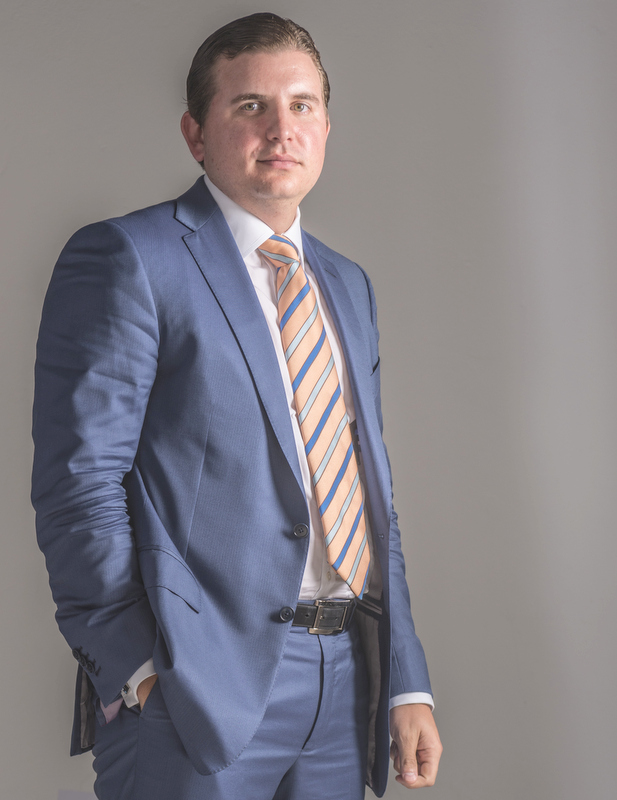

- Molina affirms that no one can instruct a judge on how to rule on a case
- He guarantees that the justice system is ready to protect investors
The President of the Supreme Court of Justice (SCJ), Luis Henry Molina, assured the business community yesterday that in the Dominican Republic “there are clear rules, independent judges, and a rule of law that works.”
As the keynote speaker at the first luncheon of the year organized by the American Chamber of Commerce of the Dominican Republic (AMCHAMDR), Molina stated that Dominican judges do not respond to political parties or law firms, and that they act solely under the authority of the law and the Constitution.
He explained that, for this reason, while 68% of the countries assessed by the World Justice Project (WJP) experienced setbacks in the rule of law, the Dominican Republic advanced 11 positions in 2025 and 20 positions since 2019.
Nevertheless, he acknowledged that the Dominican Judicial Branch still faces challenges, one of which is the complete eradication of what he described as “endless litigation,” which, according to him, is no longer the norm.
Long judicial processes
The President of the SCJ and of the Judicial Council expressed his aspiration that no case should take more than one year to be resolved by the courts.
He emphasized that this is the goal: a justice system that operates with the same agility required by the business environment.
“What do we want? Our objective is that no case—from the moment it begins at the first level until it is concluded—takes more than one year, because that is what the Dominican economy needs: a justice system that is credible, reliable, and predictable,” Molina stated.
He reiterated that companies need security in order to invest, and that the justice system is the “shield that protects” and guarantees investor confidence.
Speaking before business leaders, members of the diplomatic corps, members of the judiciary, and legislators, the head of the high court stressed that the Judicial Branch operates with a high level of transparency, which can be verified online. He noted that the judiciary’s digital platforms even offer a “higher level” of service than those of many U.S. states.
Growing credibility
Molina stated that the credibility of the Dominican justice system has increased over the past five years, and that this is because “no one can tell any judge how to decide a case.”
As an example, he explained that, as President of the Supreme Court of Justice, he has “never” called a judge—or anyone within the Supreme Court—to influence the outcome of a case.
“Judges must understand—and they do—that their independence is a right of the citizen, and that guaranteeing this citizen’s right is fundamental for the existence of a social and democratic state governed by the rule of law,” Molina stated.
Competitiveness and trust
For the President of the American Chamber of Commerce of the Dominican Republic (AMCHAMDR), Francesca Rainieri, competitiveness is no longer measured solely by costs and incentives, but by trust.
The first woman to lead the organization in its 102-year history stated that investors seek to invest in countries where there are “clear rules, predictability, and legal certainty,” and that a strong rule of law creates confidence.
She noted that for 2026, the Dominican economy is projected to grow by 4.5%, supported by political stability and a reform agenda that strengthens key areas such as justice, the energy sector, and public procurement.
Regarding this last point, she recalled that, starting this Wednesday, the new Public Procurement Law No. 47-25 will enter into force—a legislative initiative in which AMCHAMDR actively participated.
Source: