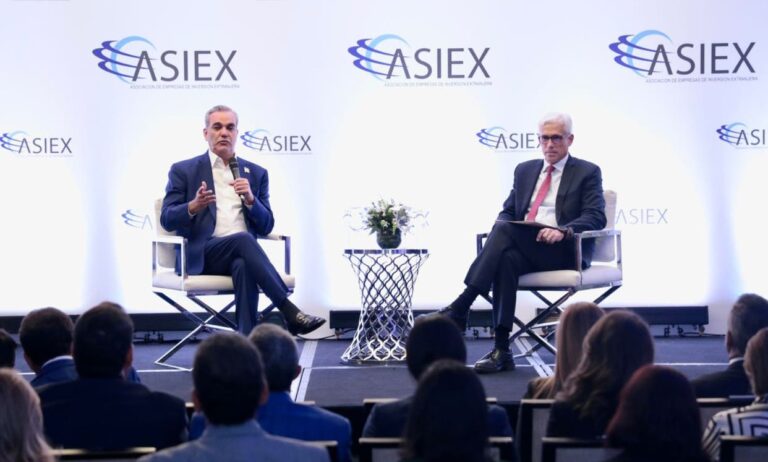
- Officials and businessmen analyze what the DR needs to attract more foreign capital
Although the Dominican Republic has stood out as one of the main destinations for foreign direct investment in Latin America and the Caribbean – exceeding 5,000 million for the first time in 2025 and with the potential to add an additional 200 million dollars to that new ceiling by the end of this year – there are limitations that must be overcome to maintain its positioning over time.
Improving public infrastructure, especially roads and services, encouraging strategic sectors that require more specialized human capital and reducing bureaucracy in state procedures, such as permitting, are some of the aspects where officials, businessmen and international experts agreed during the first America’s Investment Forum.
The forum is an international event that analyzes the prospects of attracting capital to countries throughout Latin America and the Caribbean.
2026 goal
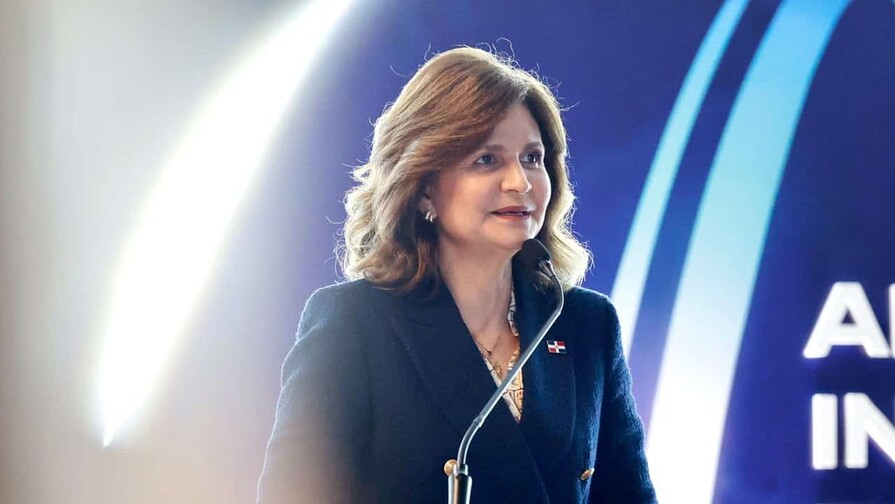
Leading the event, the Vice President of the Republic, Raquel Peña, emphasized that foreign investment reached 1,536.7 million dollars only between January and March of this year, thanks to capital contributions that exceeded 1,846 million dollars, a sign that “fresh investment” continues to arrive in the country.
In line with the Dominican Central Bank forecasts, the official said that “If this pace keeps up, we are looking at the current year closing with 5,200 million dollars in foreign direct investment,” assuring that this not only maintains investor confidence, but also promotes new jobs and affects exports.
More infrastructure
The experts who participated in the event’s cycle of panels and international conferences agreed almost in unison on the qualities that facilitate foreign investment in the Dominican Republic: investor confidence in the investment climate, legal certainty, economic stability, the quality of human capital and potential in key productive sectors.
Director of the World Tourism Organization (UN Tourism), Natalia Bayona, highlighted that more than being a strategic sector for the economy, tourism has positioned the Dominican Republic as the fifth destination for attracting capital within the global industry, and emphasized how the country and the rest of the Caribbean can benefit from a regional tourism model.
For this to happen, the executive said that air connectivity with all Spanish and English-speaking Caribbean countries must be strengthened, in addition to suggesting the creation of special economic zones for investment.
“This is so that the investor sees the Caribbean as a bloc, just like the European Union is seen, or Africa, that is divided into several ‘Africas’ (…) so that investment is recurrent,” Bayona emphasized when speaking on the “Building a regionally integrated tourism strategy” panel.
She recalled that the Caribbean is a region that accumulates more than 2% growth in the tourism industry, so it has opportunities to continue maturing its offer in this regard.
However, more public infrastructure is also required within the Dominican Republic, especially in terms of roads and services, according to the executive president of Grupo Puntacana (CEO), Frank Elías Rainieri.
“The tourists who visit us generally come from countries more advanced than us and are used to a first-world infrastructure of roads, logistics, airports and hotels and they are expecting that same culture in the countries they are going to visit,” said the executive.
Although tourism is a safe industry for investment, Rainieri believes it also has “the disadvantage” of being very long-term, which requires a stable legal framework and clear rules that provide guarantees for the development of the sector.
Less bureaucracy
Another sector that demands clear rules and alignment with the communities it impacts is mining, where officials, executives and experts were analyzing the opportunities and challenges of investment in this segment.
The Minister of Energy and Mines, Joel Santos, acknowledged that reducing bureaucracy – especially permit issuing procedures – “is essential” to attract investment.
“It is very difficult for a foreign investor because he doesn’t deal with the locality; In his country he may be able to handle it, but when he arrives in another country it is difficult for him to understand the processes. Without a doubt, all permitting processes using new technologies are necessary,” he emphasized.
He went on to explain that the ministry is streamlining changes to Mining Law 146-71 to be submitted to the National Congress for approval, changes aimed at making permitting more efficient, adapting the law to the industry’s technological changes and including considerations in environmental sustainability and direct investment in the communities.
“We are trying to see if in the next 60 or 90 days we can present it for review purposes,” he added.
Stronger cooperation
As part of the international cooperation agenda, the Dominican Republic strengthened agreements of understanding with countries in the region such as Honduras and Paraguay.
The Export and Investment Center of the Dominican Republic (ProDominicana) and the National Investment Council of Honduras (CNI) renewed their memorandum of understanding, a document signed by the secretary of the CNI, José Ricardo Fuentes, and the executive director of ProDominicana, Biviana Riveiro. The renewal of the agreement reaffirmed the commitment of both institutions to strengthen technical collaboration, the exchange of good practices, and the joint promotion of investments. On the other hand, ProDominicana and the Investment and Export Network (Rediex) of Paraguay signed a memorandum of understanding to strengthen cooperation in promoting investments, trade and exchange of good practices. Backed by the Dominican-Paraguayan Chamber of Commerce, the agreement aims to generate new business opportunities and strengthen economic ties between the two countries.
Source: