
- The government reckons that the country will reach US$4,860 million in foreign direct investment by the end of 2025
President Luis Abinader said (Monday) that the Dominican Republic is strengthening its position among the Latin American countries that attract the most foreign direct investment (FDI).
During LA Semanal con la Prensa, he highlighted that FDI fell by 11% globally in 2024, according to the World Investment Report. However, in the Caribbean region it grew by 21%, driven mainly by increased investments in the country.
“The Dominican Republic has a 4.5% economic growth forecast in recent years as well as for 2026, which also reflects the foreign investment that we have had this year and that will continue next year and the confidence of international economic agents,” Abinader said.
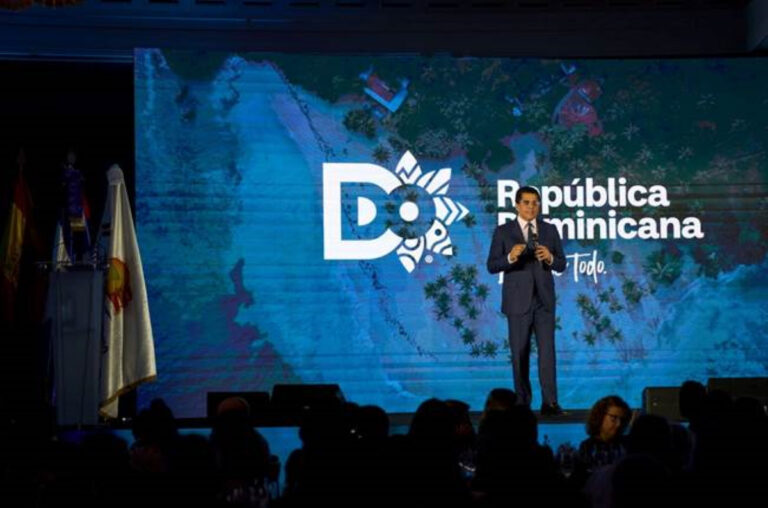
For her part, ProDominicana director, Biviana Riveiro, stressed that the DR represents the most valuable Country Brand in Central America on an international level, according to the Global Soft Power Index, 2025, and it is the region’s prime destination for FDI in renewable energy and tourism projects, according to FDI Markets, 2024.
The country attracted 2,892.8 million dollars in foreign investment, in the first half of 2025. That’s 15.3% more than in the same period of 2024. In the full year 2024, investment reached an all-time high of $4.523 billion, with a forecast of $4.86 billion by 2025. FDI grew by 49.7% in the period 2019-2024.
The main investing countries, in millions of dollars, were the United States (1,1161.9), Spain (1,126), Brazil (229.2), Canada (207.4) and Panama (192.2). The most dynamic sectors were tourism (28.4%) and energy (25.2%), reflecting the growing interest in renewable energies.
Trade and investment
The country’s key trade agreements are the DR-CAFTA (with the United States and Central America), the Caricom, with the Caribbean community, the Cariforum-European Union and Cariforum-United Kingdom, and the partial scope agreement with Panama. It also enjoys preferential access to markets such as Australia, Japan, Russia and Switzerland.
Reciprocal investment promotion and protection agreements were also signed with Argentina, Qatar, Chile, South Korea, Spain, France, Italy, Morocco, the Netherlands, Panama and Switzerland. This facilitated the growth of Dominican exports by 28% since 2019, reaching an all-time record of 12,925 million dollars in 2024, and with preferential access to more than 1,200 million consumers.
Connectivity
The Dominican Republic has eight international airports, 17 cruise terminals and cargo ports, more than 135,000 commercial flights, more than 370 daily flights, 375 air operators, and 19 million passengers registered between arrivals and departures.
Human talent
There are more than 85,000 graduates in business and economics, more than 24,000 engineers, 50,000 health professionals, more than 16,000 professionals in Information and Communication Technologies (ICT) and 97,000 students in English immersion programs.
Tourism and free zones
Tourism maintains its position as a regional leader, with 11.2 million visitors by air and sea in 2024, 48% more than 2019, and revenues of 10,974 million dollars, a record figure in the country’s history. Also in 2024, the sector registered 399,620 direct and indirect jobs and a hotel occupancy rate of 76.4%.
By January–September 2025, arrivals totaled 8.6 million visitors, up 2.6% from the previous year.
The free zone sector also maintains constant growth, with more than 90 parks and 850 companies operating, and exports of 8,607 million dollars in 2024, 6.9% more than in 2023. In total, it generates 198,600 direct jobs and has attracted US$417 million in FDI.
Economic impact
Foreign capital companies represent about 70% of national exports with 8,914 million dollars, contributing 3,850 million dollars in taxes (28% of total revenue) and creating more than 210,000 formal jobs, equivalent to 9% of the country’ total number of formal workers. At the end of 2024, the accumulated stock of FDI was estimated at 60,870 million dollars.
FDI Attraction and Expansion Plan 2025–2036
The Minister of Industry, Trade and MSMEs, Víctor -Ito- Bisonó, emphasized that the FDI Attraction and Expansion Plan 2025-2036 encourages innovative sectors such as semiconductors, artificial intelligence, aeronautics and aerospace, automotive, electronics, logistics and distribution centers, and life sciences, in addition to traditional sectors such as agribusiness, renewable energies, solid waste management, mining, tourism, film industry and real estate.
This plan is aligned with the 2030 National Development Strategy, the 2030 Digital Agenda, and the National Innovation Policy.
Source: