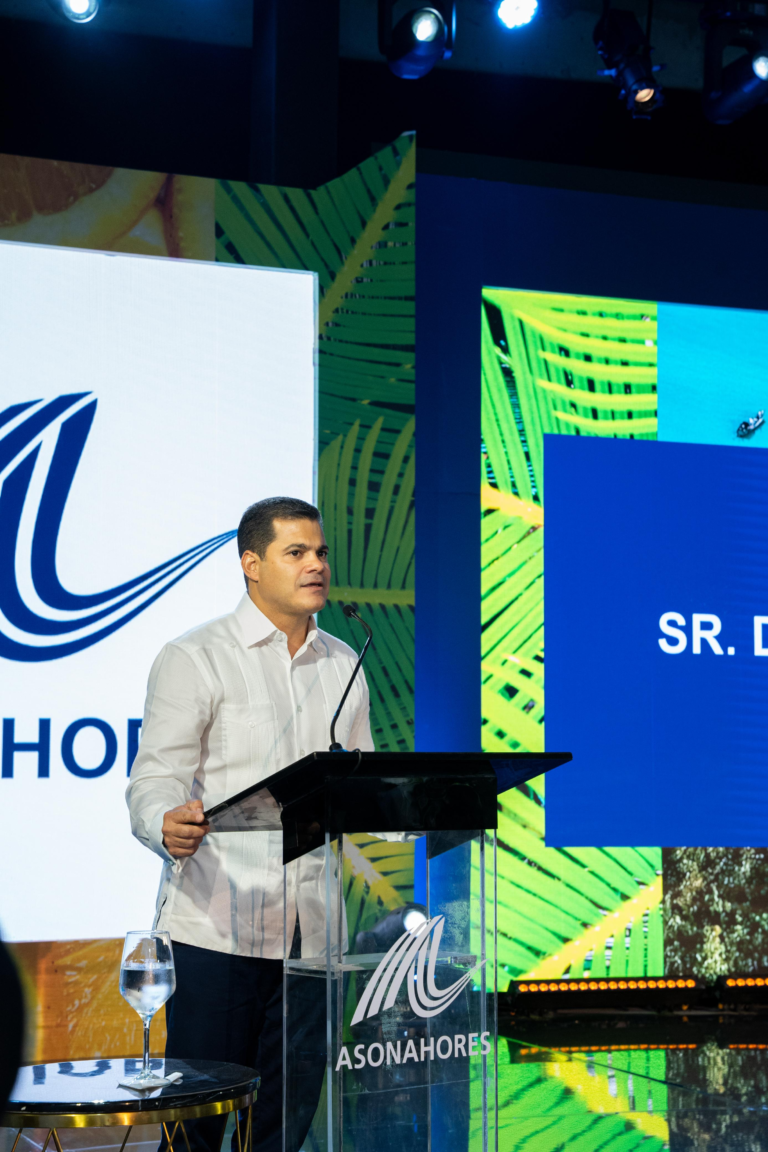

Recenty I attended the 25th Annual Summit of the World Travel & Tourism Council (WTTC), held in Rome, Italy, with notable success. It was inaugurated by Prime Minister Giorgia Meloni, who made a positive impression with a speech fully committed to developing Italy’s tourism agenda, which, she stated, accounts for 13% of the country’s GDP.
While in Florianópolis, Brazil, in 2009, and in Seville, Spain, in 2019, we had the presence of Presidents Lula and Sánchez, this was the first time the global summit was held in Italy and when a G7 country head of state addressed the leaders of the public and private sectors of global tourism.
But what struck me most was not that, but the presence of many of Italy’s most important protagonists in the travel, hospitality, and tourism industry, which covers everything. Among the speakers were Luca Cordero di Montezemolo, former iconic Ferrari president now leading Ítalo Nuovo Transporto, the private high-speed train line; Leonardo Ferragamo, president of Lungarno Collection, the boutique hotel chain founded by the same-named family; and Arrigo Cipriani of the legendary Harry’s Bar in Venice, among others.
This highlighted the importance that tourism has acquired worldwide, both for political classes and for the private sector. Italy is an example of how its most prestigious business fabric is integrated into the powerful service industry that tourism represents.
The reason is clear. WTTC predicts that the travel and tourism industry will contribute $11.7 trillion to the global economy in 2025, a significant increase from $10.9 trillion in 2024. Additionally, it will generate 371 million jobs. In the future, tourism is expected to create one out of every three new jobs worldwide, a huge leap from the current ratio of one out of ten.
In Spain, I see that “the sector is experiencing its best historical moment,” with 66.8 million visitors in the first eight months of the year. This represents a 3.9% increase compared to the same period in 2024 and brings the country closer to its goal of reaching 100 million visitors.
In the words of Spanish Minister of Industry and Tourism Jordi Hereu, “the evolution responds to the commitment to a sustainable model based on prioritizing quality over quantity, decentralizing destinations, and diversifying the tourism offer.”
Just between August 2024 and August 2025, tourism spending increased by 1 billion euros, reaching the record figure of 16,389 million. The United Kingdom remains the primary source of tourists, and its visitors spend the most.
In our country, the public policies implemented by President Abinader and Minister Collado have been successful. They not only promote Miches and Pedernales as new tourist destinations but also bet on Punta Bergantín and Playa Grande to attract investments and generate jobs on the northern coast.
They have maintained an open skies policy and support for Arajet, aiming to strengthen high-potential source markets, with positive results in Southern Cone countries like Colombia, Argentina, Brazil, and Chile.
They have also fostered investments in innovative projects alongside major North American hotel brands, including Marriott, Hyatt, IHG, and Rosewood. The new W Hotel and St. Regis are examples—unthinkable just a decade ago.
The government has also consistently attended to the US and Canadian markets, our main source markets, which contribute the most to the average daily expenditure per tourist, rising from $137.25 in 2019 to $172.49 in the first half of 2025—a 25.67% increase in six years.
The taste is sweet, and we must continue betting on humanity, border rapprochement, the country’s social and political stability, and our main asset: the Dominican. All of this with the awareness that “the tourist is more demanding every day regarding the experience they expect to enjoy and the service they expect to receive.”
The luck is in our hands.
Source: